

In today’s highly competitive digital landscape, brand differentiation in marketing has become more important than ever. Consumers are exposed to thousands of advertisements daily across social media marketing, search engines, influencer campaigns, and email marketing.
Despite this constant visibility, many businesses face a major challenge:
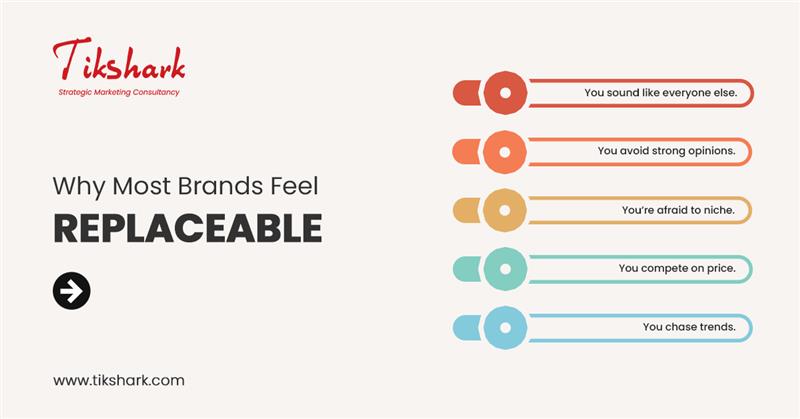
Their brand feels replaceable.
Customers scroll past their content. They forget the brand within minutes. Or worse, they choose whichever option is cheaper or more convenient.
The issue is rarely the product itself.
More often, the real problem lies in weak brand positioning, unclear messaging, poor brand identity, and the absence of a strong marketing strategy.
According to research by Nielsen, 59% of consumers prefer buying from brands they recognize and trust. Brand recognition and brand trust are not accidental. They are built through consistent messaging, strong positioning, and clear audience targeting.
At Tikshark, we regularly conduct brand audits and marketing strategy reviews. One recurring pattern stands out:
Many companies are actively promoting their products but very few are building a memorable brand.
In this article, we explore:
-
Common brand positioning mistakes
-
The impact of brand commoditization
-
Practical strategies to stand out in competitive markets
The Growing Problem of Brand Commoditization
One of the biggest challenges in modern marketing strategy is brand commoditization.
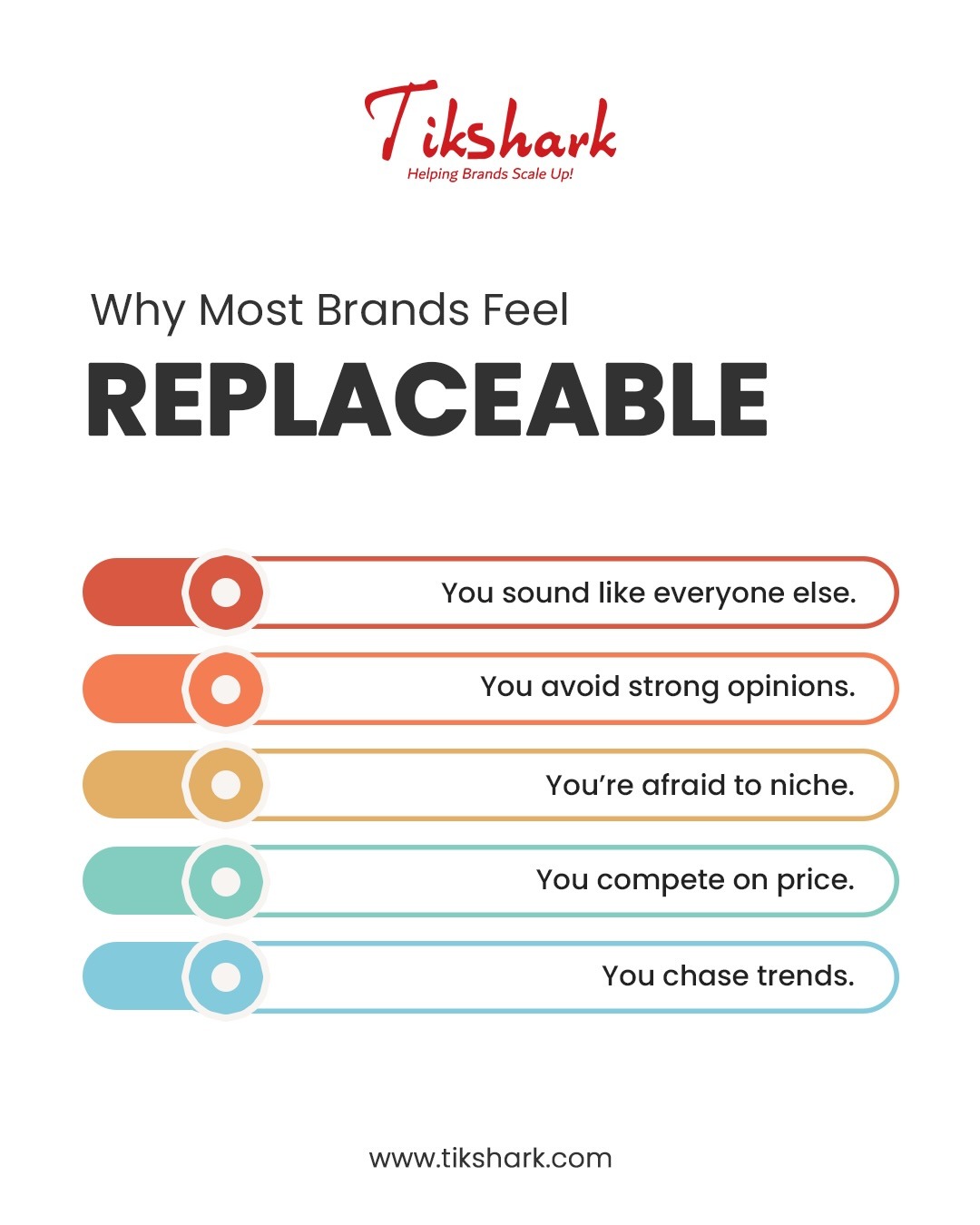
Brand commoditization happens when products or services look so similar that customers struggle to see meaningful differences between competitors.
When this happens, buying decisions come down to:
-
Price
-
Convenience
-
Availability
This pattern is common across industries, including:
-
Beauty and skincare brands
-
Direct-to-consumer (D2C) brands
-
Fashion and apparel companies
-
SaaS platforms
-
Marketing agencies
-
Consumer technology brands
When brands fail to communicate unique value propositions, they slowly become interchangeable.
Over time, this weakens:
-
Brand loyalty
-
Customer retention
-
Long-term brand growth
-
Profit margins
1. Your Brand Sounds Like Everyone Else
One of the most common brand differentiation mistakes is generic messaging.
Visit multiple websites in the same industry and you will often see phrases like:
-
High-quality products
-
Customer-first approach
-
Innovative solutions
-
Trusted by thousands
These statements sound positive — but they lack specificity.
From an SEO and brand positioning perspective, generic messaging makes it difficult for your brand to rank, stand out, or be remembered.
Why This Happens
Many businesses try to sound professional by removing personality from their brand voice. Marketing teams often avoid strong opinions or distinctive messaging to avoid alienating potential customers.
However, when every message is neutral and safe, the brand loses identity.
How to Fix It
Strong brands invest in:
-
Clear brand voice development
-
Authentic storytelling
-
Consistent messaging framework
-
Audience-focused communication
-
Unique value proposition
Over time, this strengthens brand recognition across digital marketing channels including social media, paid advertising, content marketing, and influencer marketing campaigns.
2. Brands Avoid Strong Opinions
Another major reason brands struggle with differentiation is excessive neutrality.
In today’s attention economy, neutral brands rarely attract engagement.
Consumers are drawn to:
-
Industry expertise
-
Thought leadership
-
Transparent communication
-
Clear viewpoints
According to the Edelman Trust Barometer, consumers increasingly expect brands to demonstrate expertise and credibility.
Content That Builds Brand Authority
Brands that share confident insights often see:
-
Higher engagement rates
-
Increased organic reach
-
Greater brand trust
-
Stronger audience loyalty
Authority-building content includes:
-
Industry insights
-
Educational blog content
-
Trend analysis
-
Opinion-based content marketing
-
Thought leadership articles
This type of content strengthens both SEO visibility and brand credibility.
3. Trying to Appeal to Everyone
One of the biggest marketing strategy mistakes is trying to target everyone.
Broad targeting often leads to vague messaging, which reduces conversion rates.
This is where niche marketing strategy becomes powerful.
The Power of Niche Positioning
Compare these two examples:
Generic positioning:
“Skincare for everyone.”
Strong positioning:
“Dermatologist-backed skincare for acne-prone Indian skin.”
The second example clearly defines:
-
Target audience
-
Core problem
-
Brand expertise
This improves:
-
Search engine visibility
-
Audience clarity
-
Conversion rates
-
Brand recall
Benefits of Niche Marketing
Brands focused on niche audiences often achieve:
-
Higher engagement
-
Better SEO rankings
-
Stronger influencer collaborations
-
Improved brand loyalty
-
Higher customer lifetime value
At Tikshark, identifying the correct audience niche is the foundation of every successful brand positioning strategy.
4. Competing Only on Price
Price-based competition is one of the fastest ways to weaken brand value.
When a brand constantly promotes discounts, customers begin associating the brand only with affordability.
The problem?
There will always be someone cheaper.
Risks of Price-Driven Marketing
-
Lower profit margins
-
Weak brand equity
-
Reduced customer loyalty
-
Continuous promotional dependency
According to Harvard Business Review, emotionally connected customers can be more than twice as valuable as highly satisfied customers.
This proves that emotional branding and brand storytelling outperform price wars in the long term.
Strong brands compete on:
-
Value
-
Experience
-
Emotional connection
-
Community
-
Brand perception
5. Chasing Trends Instead of Building Strategy
Trend-based marketing can generate short-term engagement but rarely builds long-term brand recognition.
Jumping between:
-
Viral reels
-
Meme marketing
-
Influencer trends
-
Short-term content hacks
Without a clear strategy creates inconsistency.
Strategic Brand Building Requires:
-
Clear brand positioning
-
Consistent visual identity
-
Messaging framework
-
Defined audience targeting
-
Long-term content strategy
Trends should amplify your brand identity — not replace it.
How Tikshark Helps Brands Build Strong Differentiation
At Tikshark, we specialize in helping brands move beyond generic marketing and build powerful, memorable identities.
Our brand strategy services include:
-
Brand positioning strategy
-
Brand differentiation consulting
-
Influencer marketing campaigns
-
Creator partnerships
-
Social media growth strategy
-
Performance marketing
-
Content marketing strategy
-
Brand audit and messaging optimization
Our mission is simple:
To help businesses build recognition, trust, authority, and long-term brand growth in competitive markets.
Final Thoughts: Visibility Is Not Enough
In modern marketing, visibility alone does not create brand success.
Without clear brand differentiation, businesses become interchangeable.
But replaceability is not permanent.
Brands that invest in:
-
Clear positioning
-
Niche audience focus
-
Authentic storytelling
-
Emotional branding
-
Strategic marketing planning
Build identities that customers recognize, trust, and choose repeatedly.
Because in competitive markets, the brands that win are not the loudest.
They are the clearest.

Frequently Asked Questions (FAQ)
Why is brand differentiation important in marketing?
Brand differentiation helps businesses stand out in competitive markets, build trust, and avoid price-based competition. It improves customer loyalty and long-term growth.
What causes brand commoditization?
Brand commoditization happens when companies fail to communicate unique value, resulting in customers making decisions based only on price or convenience.
How does niche marketing improve brand positioning?
Niche marketing allows brands to target a specific audience with clear messaging, leading to better engagement, higher conversions, and improved SEO visibility.
Why is competing on price risky?
Price-based competition reduces profit margins and weakens brand equity. Customers who buy only based on price are more likely to switch brands.
How can a brand strategy consultancy help?
A brand strategy consultancy helps define positioning, messaging, audience targeting, and marketing frameworks that improve differentiation and long-term growth.
Get a Free Brand Positioning Mini Audit
Wondering why your brand is not standing out in a crowded market?
Let us analyze your positioning, messaging, and marketing strategy — and show you where differentiation is missing.
👉 Book your free brand audit with Tikshark today by click below link or call us at +91 8368470599.
click here : https://tikshark.com/fmcg-playbook